

How to Choose Ube Powder
Ube powder has become a distinctive ingredient for brands and manufacturers seeking authentic flavor, natural purple color and versatile applications across beverages, bakery and food products. However, the quality and performance of ube powder can vary significantly depending on the raw material, processing method and product specification.
For international buyers, choosing the right ube powder involves more than comparing prices or selecting the darkest purple color. Authenticity, consistency, texture and performance in the final product should all be carefully considered.
This guide explains how to choose ube powder for beverage, bakery and food manufacturing applications.
1. Authenticity Starts with the Raw Material
The first question every buyer should ask is:
- What is the powder actually made from?
- Authentic ube powder is made from Dioscorea alata, commonly known as purple yam. Ube is sometimes confused with purple sweet potato because both ingredients naturally have a purple color.
- However, they are different raw materials with distinct flavor profiles and product characteristics.
Before purchasing bulk ube powder, buyers should confirm:
- Is the powder made from Dioscorea alata?
- Is it 100% pure ube?
- Are other ingredients included?
- Does it contain added color or flavor?
- Can the supplier provide a complete ingredient declaration?
For brands developing authentic ube products, verifying the raw material is the foundation of successful sourcing.

2. Choose Ube Powder for Your Application
The best ube powder depends on how it will be used. Different applications require different characteristics, and selecting the right specification can make a meaningful difference to the quality of the final product.
Ube Powder for Beverages
For applications such as:
- Ube latte
- Milk tea
- Smoothies
- Beverage mixes
buyers should consider:
- Fine texture
- Smooth mouthfeel
- Good dispersion
- Consistent natural color
A powder that is too coarse may create sediment or an undesirable texture in beverages.
At the same time, buyers should understand that 100% natural ube powder may perform differently from an instant beverage formulation. The ideal specification should always be selected according to the final recipe and production process.
Ube Powder for Bakery and Desserts
Ube powder can be used in a wide range of products, including:
- Cakes
- Cookies
- Pastries
- Mochi
- Ice cream
- Cream fillings
- Confectionery
For these applications, manufacturers may prioritize:
- Natural color performance
- Authentic flavor
- Suitable particle size
- Moisture control
- Consistent quality
The most reliable way to evaluate an ingredient is to test it directly in the intended formulation.

3. Understand How the Ube Powder Is Produced
From raw material selection to drying, milling and final packaging, every stage of production can influence the quality and consistency of the finished powder.
Buyers should understand how the ube is:
- Selected
- Prepared
- Dried
- Milled
- Sieved
- Packed
Controlled processing is particularly important for commercial production, where consistent quality is required across multiple batches.
For long-term sourcing, buyers should look beyond the first sample and consider whether the supplier can maintain reliable specifications over time.

4. Consider Particle Size and Texture
Particle size plays an important role in how ube powder performs in the final product.
- Application Key Consideration
- Beverages Smooth texture and good dispersion
- Milk Tea Low grittiness
- Bakery Easy and consistent mixing
- Cream Fillings Fine texture
- Food Manufacturing Consistent specifications
The finest powder is not always the best choice.
Instead, the ideal specification should match the intended application and processing requirements.
A supplier who understands the final product can provide more meaningful recommendations than one offering a single specification for every use.

5. Review Moisture and Batch Consistency
Moisture control is an important consideration when sourcing powdered food ingredients.
It can influence:
- Shelf stability
- Powder flow
- Product consistency
- Risk of clumping
International buyers should request a clear product specification and discuss quality requirements before placing a bulk order.
For commercial manufacturing, batch-to-batch consistency is just as important as the quality of the first sample.
A premium ingredient is not defined by appearance alone, but by how consistently it performs in the final product.
6. Natural Color Is More Than Appearance
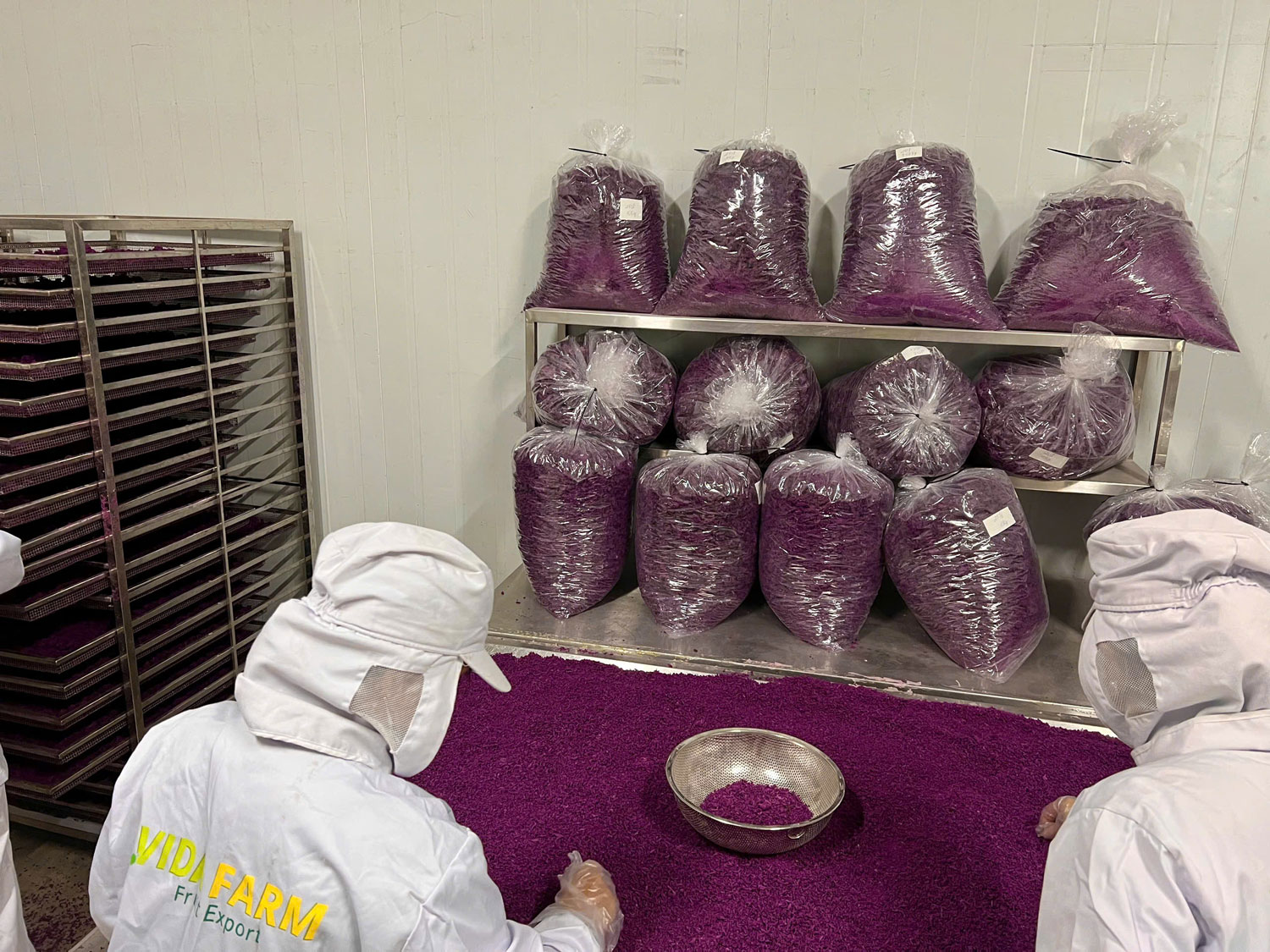
A vibrant purple color is one of ube’s most distinctive characteristics. However, natural color should be evaluated alongside raw material quality, processing conditions and batch consistency.
Natural variation can occur depending on:
- Ube variety
- Raw material quality
- Harvest conditions
- Processing method
- Drying conditions
For commercial applications, the objective should be consistent and controlled quality rather than simply selecting the most intense color. Understanding natural variation is an important part of working with agricultural ingredients.
7. The Importance of an Authentic Flavor Profile
Authentic ube offers a naturally distinctive flavor profile — mildly sweet, creamy and subtly earthy, with delicate nutty notes. The intensity of the flavor can vary depending on the raw material and processing method.
Before purchasing, buyers should consider:
- Does the powder have a natural ube aroma?
- Is any flavoring added?
- How strong is the natural flavor?
- How does the flavor perform after heating or processing?
This is particularly important for premium products where ube is intended to be the main flavor. For formulations containing stronger ingredients such as chocolate, coffee or spices, different flavor specifications may be more suitable.

8. 100% Pure Ube Powder or a Customized Formulation?
Buyers should clearly understand the type of ingredient required for their product. 100% Pure Ube Powder
This may be suitable for:
- Clean-label products
- Premium brands
- Natural food products
- Authentic ube applications
Its main advantages include a simple ingredient declaration and a clear focus on the natural characteristics of ube.
Customized Ube Formulations
Customized formulations may be developed for specific applications such as:
- Instant beverages
- Milk tea
- Foodservice products
- Ready-to-use mixes
Depending on the formulation, additional ingredients may help achieve specific functional characteristics. Neither option is universally better. The right choice depends on the final application. The most important factor is transparency: buyers should always know exactly what ingredients are included in the product they are sourcing.
9. Always Test Before Ordering in Bulk
A product specification provides important technical information, but real application testing remains essential. Before placing a bulk order, buyers should test the ube powder in their actual formulation.
For beverages, evaluate:
- Texture
- Flavor
- Color
- Dispersion
For bakery products, evaluate:
- Mixing performance
- Color after baking
- Flavor after heating
For food manufacturing, evaluate:
- Production compatibility
- Product consistency
- Performance at scale
The best ube powder is ultimately the one that performs consistently in your final product.

Questions to Ask Before Buying Bulk Ube Powder
Before choosing an ube powder supplier, buyers should ask:
- Is the powder made from Dioscorea alata?
- Is it 100% pure ube?
- Are other ingredients added?
- What is the particle size?
- What are the moisture specifications?
- How consistent is the product between batches?
- Can the supplier provide a product specification and COA?
- What is the minimum order quantity?
- Are samples available for product testing?
- Can the supplier support long-term bulk orders?
These questions can help buyers reduce sourcing risks and select an ingredient suitable for commercial production.
Choosing the Right Ube Powder Supplier
When sourcing ube powder for international food and beverage applications, buyers should look beyond price alone.
A reliable supplier should provide:
- Clear raw material information
- Transparent ingredient composition
- Suitable product specifications
- Consistent production quality
- Samples for evaluation
- Technical documentation
- Bulk supply capabi
The right supplier should understand not only the ingredient itself, but also how it performs within the final product. For long-term partnerships, reliable communication, controlled production and consistent quality can be just as valuable as competitive pricing.
Looking for Bulk Ube Powder?
Choosing the right ube powder is ultimately about finding the right balance between authenticity, performance and consistency. Whether you are developing an ube latte, milk tea, bakery product, dessert or food formulation, selecting the right raw material and specification can make a meaningful difference to the final product. At Vida Farm, we supply ube powder for international B2B applications and support buyers looking for bulk supply from Vietnam.
Contact Vida Farm to discuss:
- Ube powder samples
- Product specifications
- Beverage applications
- Bakery applications
- Bulk orders
- Customized solutions
Frequently Asked Questions
How do I choose the right ube powder?
Choose ube powder based on your final application. Consider the raw material, particle size, texture, flavor, color and product specifications.
Is ube powder the same as purple sweet potato powder?
No. Authentic ube powder is made from Dioscorea alata, while purple sweet potato is a different ingredient with different characteristics.
Should I request a sample before buying bulk ube powder?
Yes. Testing the powder in your actual product formulation is recommended before placing a large commercial order.
What should I check before buying ube powder?
Buyers should review the raw material, ingredient composition, particle size, moisture specification, flavor profile, batch consistency and supplier capability.
Can ube powder be used for beverages?
Yes. Ube powder can be used in products such as ube lattes, milk tea and other beverage formulations. The ideal specification depends on the desired texture and processing requirements.